
CLAY HOUSE
Project overview
Clay House is the transformation of a late-Victorian terrace in Woollahra into a calm, materially consistent family home shaped by light, air and tactility.
Designed for the founders of LOHAS, the project became an opportunity to create a home that reflects a shared commitment to natural materials, longevity, wellbeing and thoughtful design. On a compact inner-city site, the challenge was not simply to make the house larger or brighter, but to make it feel more connected, more breathable and more resolved.
Rather than relying on one dominant gesture, the project builds its character through material continuity, controlled light and carefully framed transitions between spaces.
Design intent
-
Woollahra, Sydney, Australia
-
Terrace renovation / family home
-
Muci
-
Cumberland Building
-
Dangar Barin Smith
-
Dan Preston (video feature) / Anson Smart (home tour)
The brief centred on creating a home that felt solid, calm and connected to garden wherever possible. In a narrow terrace, that required restraint.
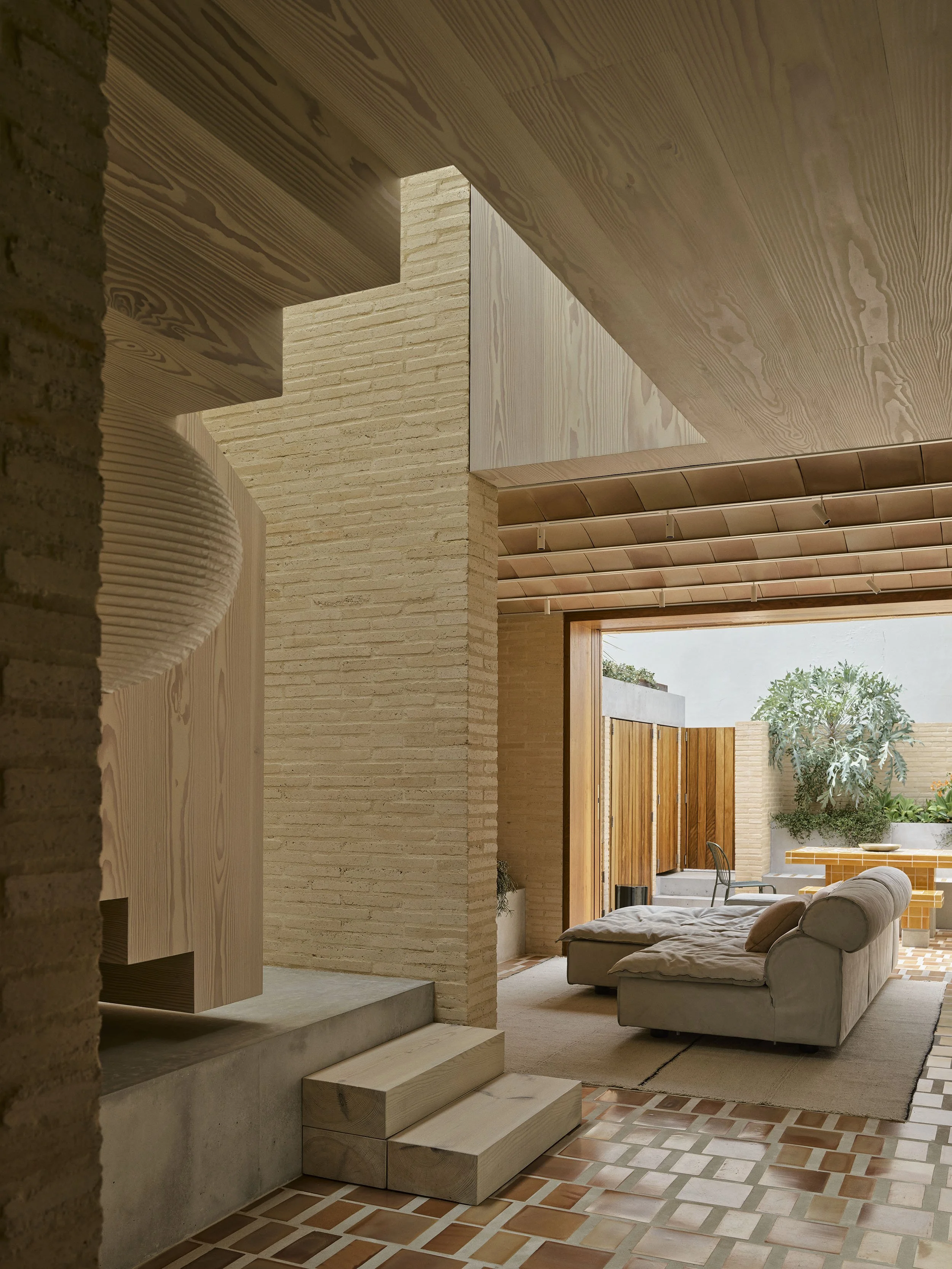
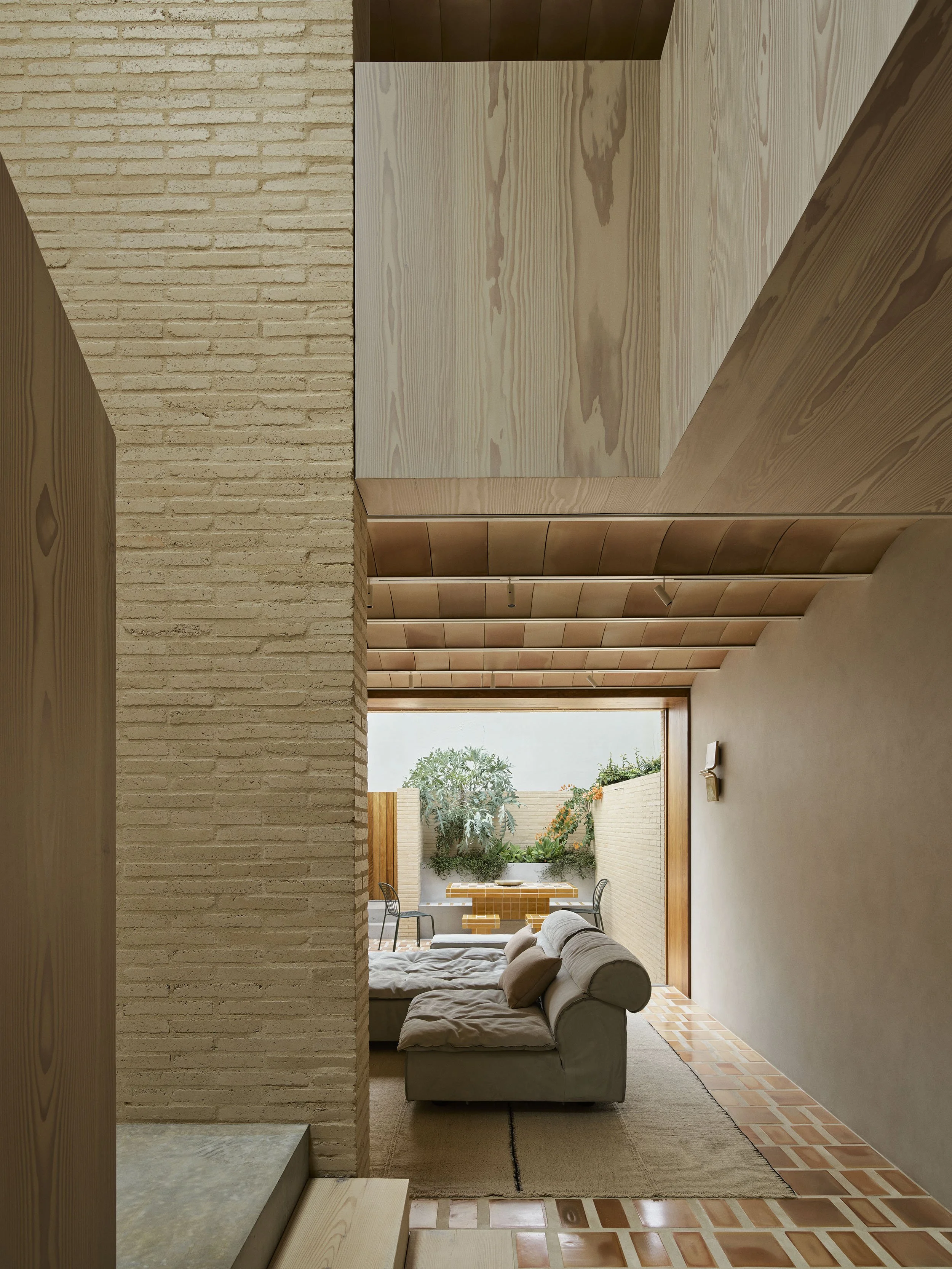
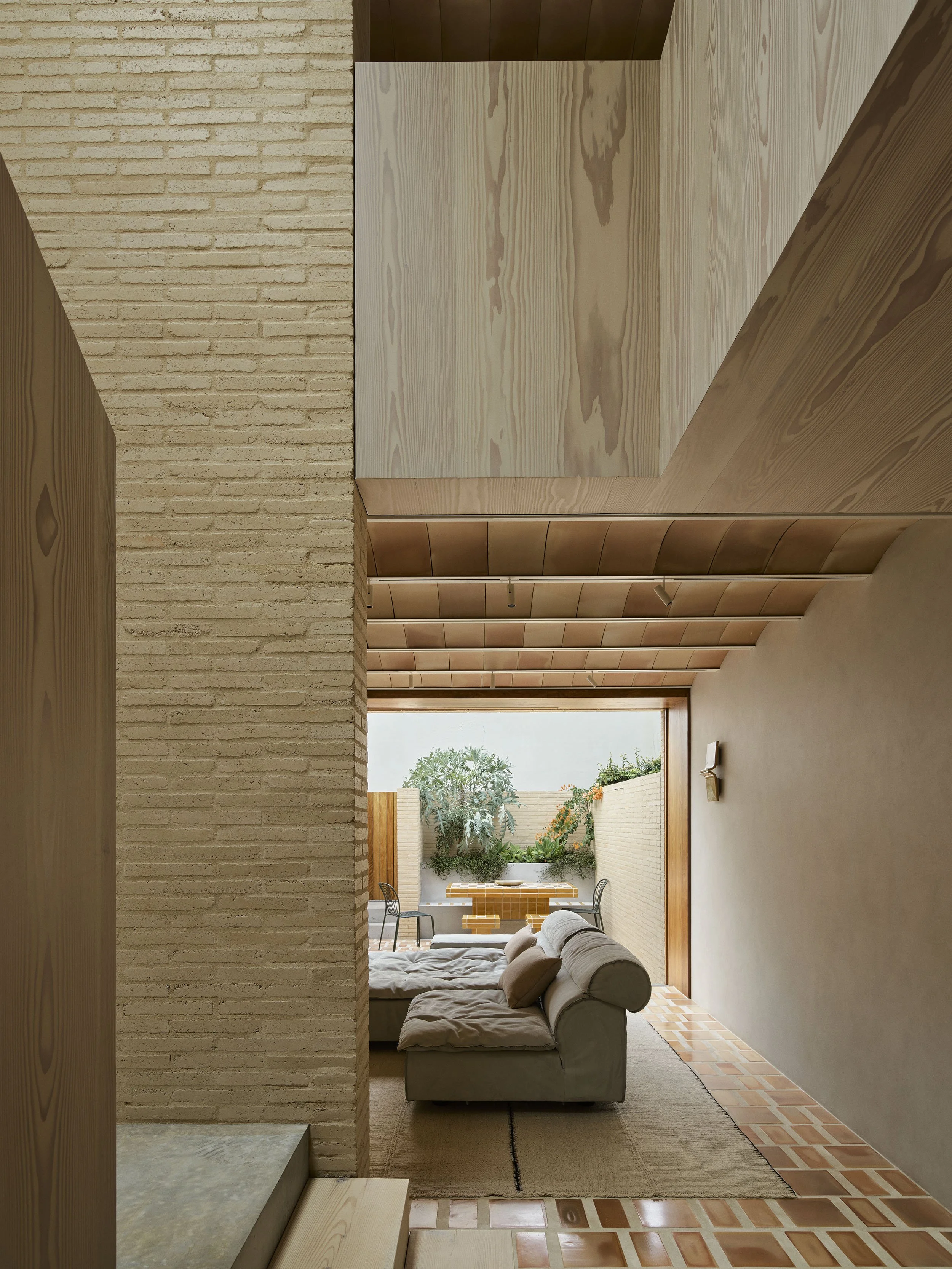
Instead of opening everything into one continuous volume, the design allows the house to unfold through a sequence of distinct but connected spaces. This gives each area its own atmosphere while maintaining a strong sense of flow. Light is drawn deep into the plan, privacy is handled with care, and the house feels more generous because of how space is paced rather than how much of it there is.
Throughout, the architecture avoids excess. The emphasis is on clarity, proportion and material presence.
Material rationale
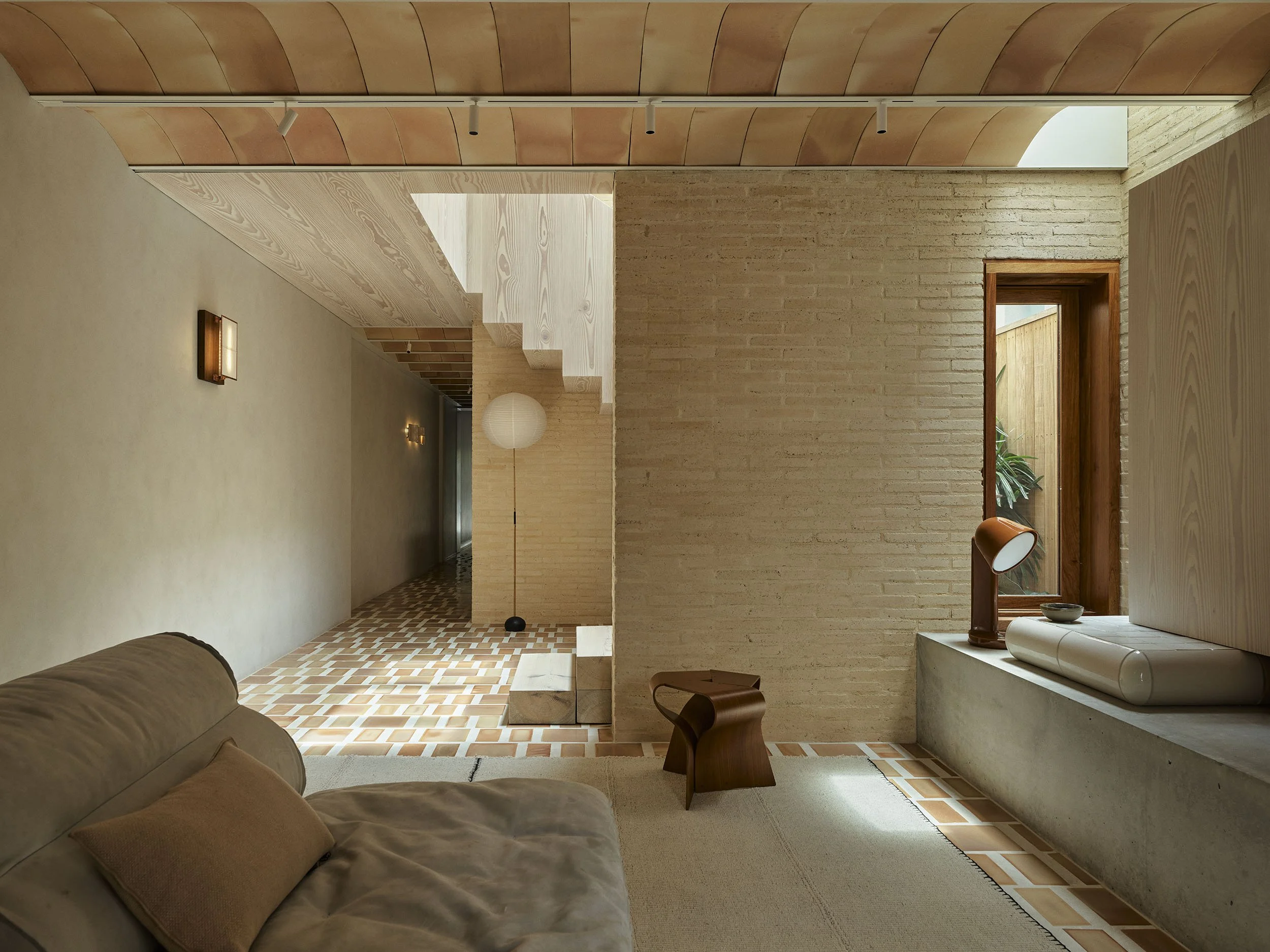
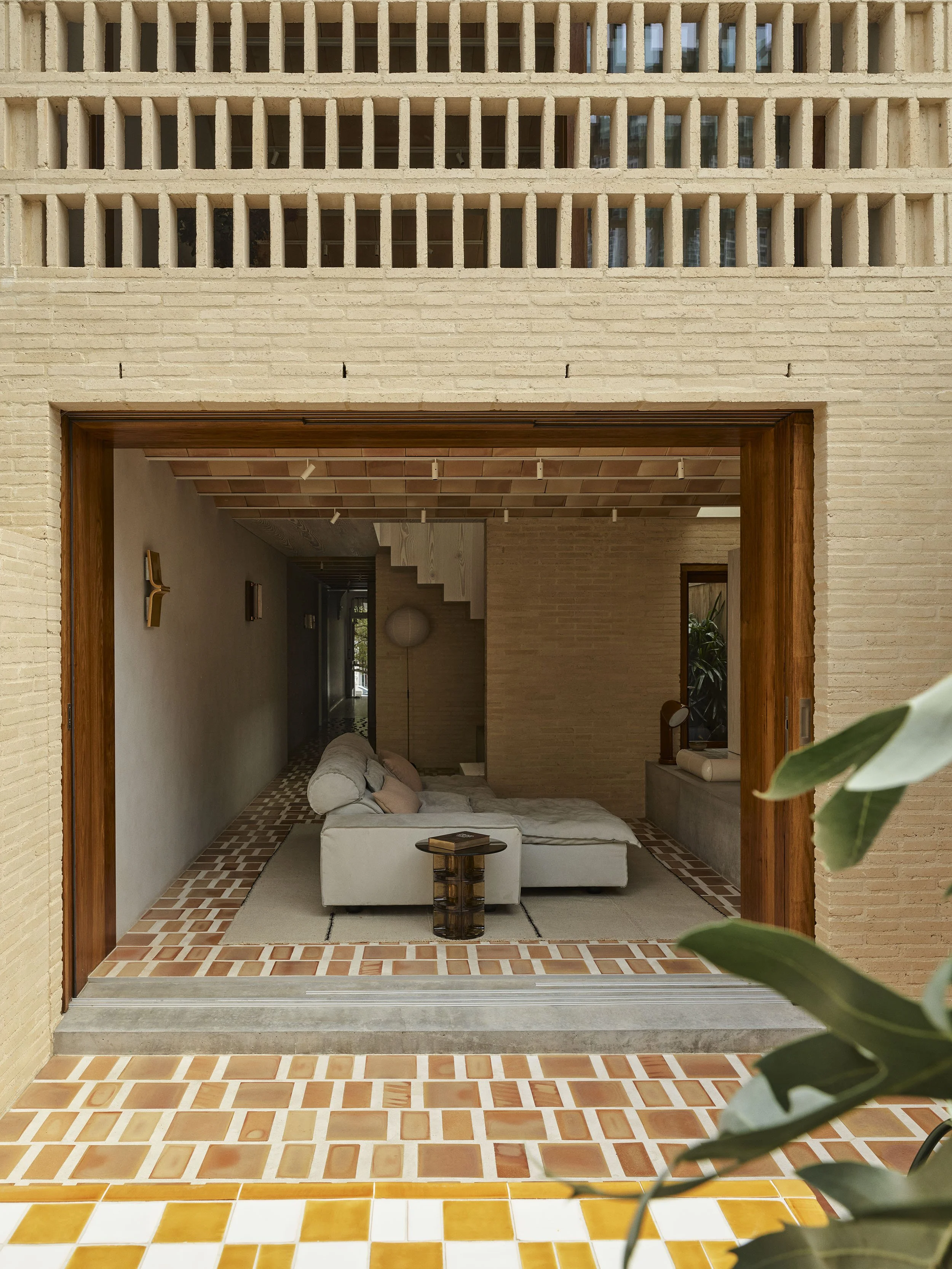
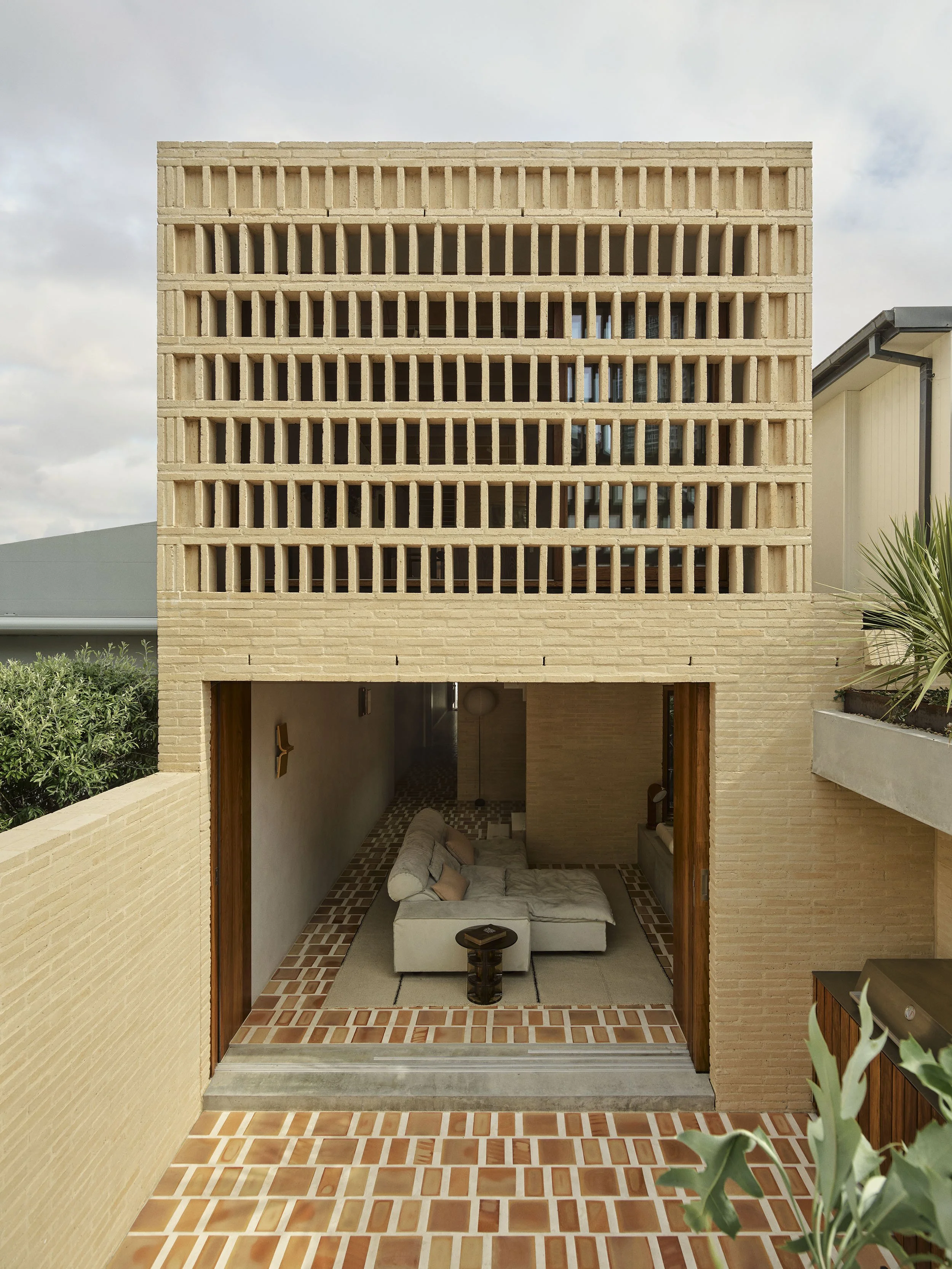
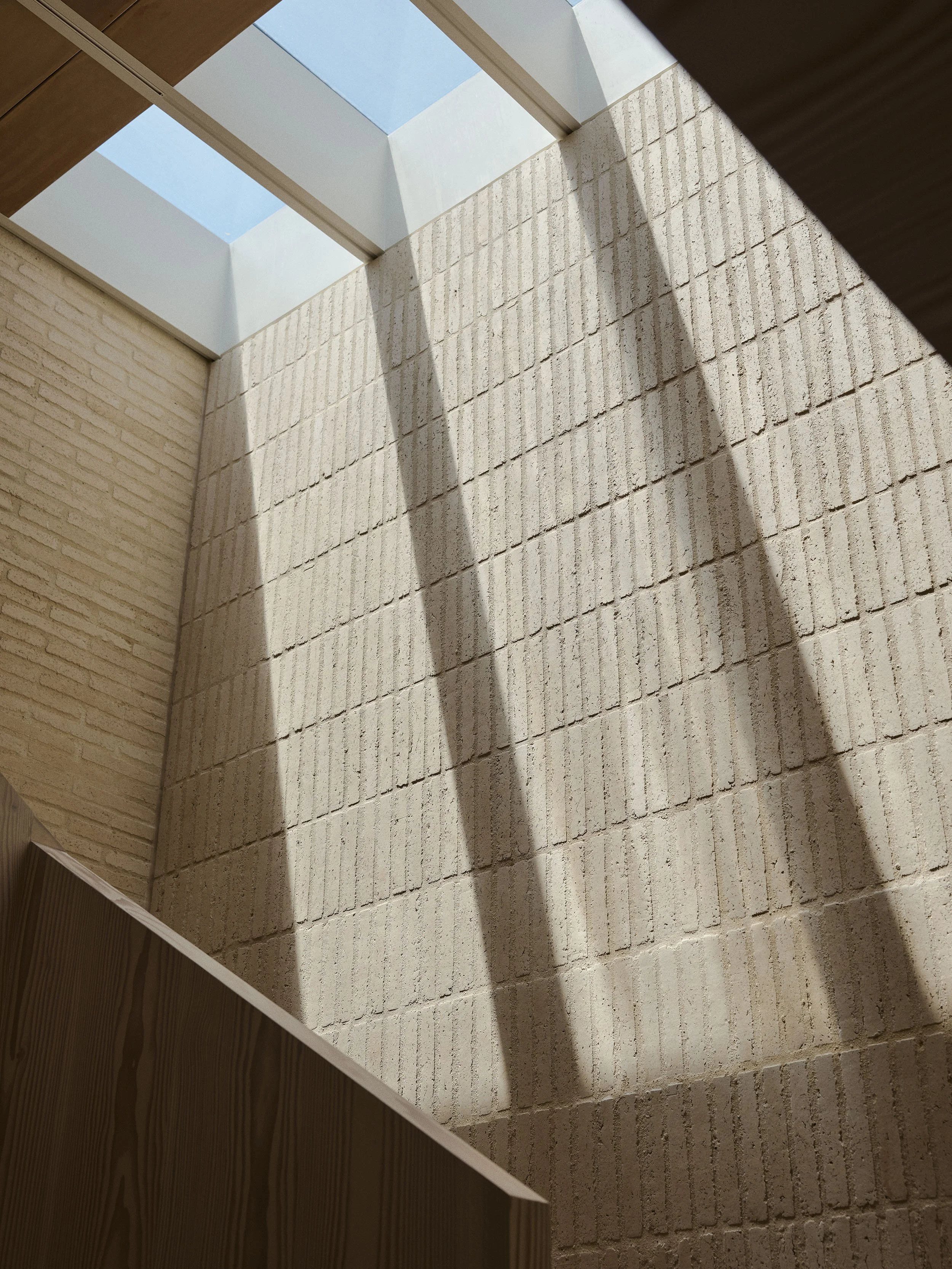
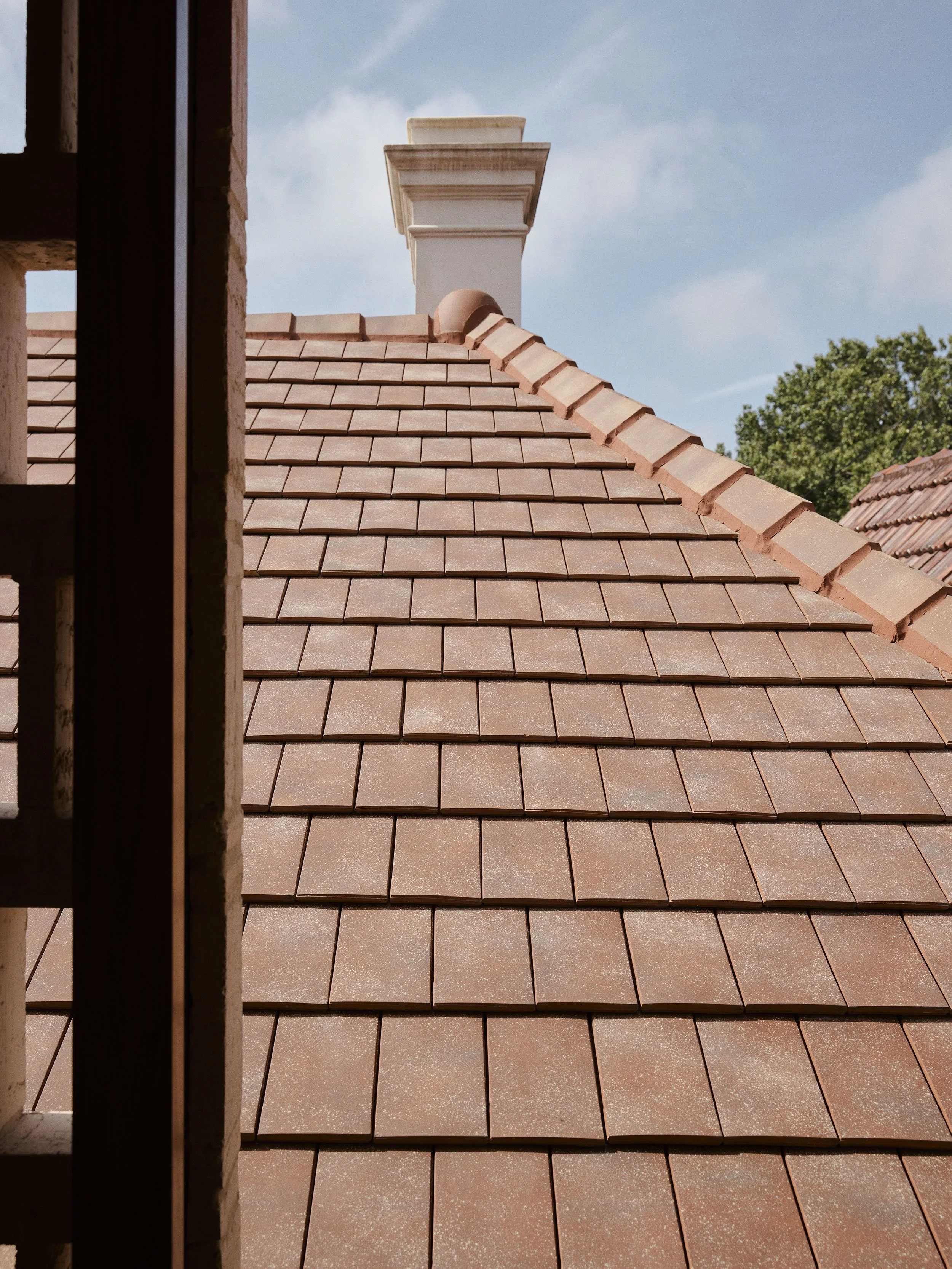
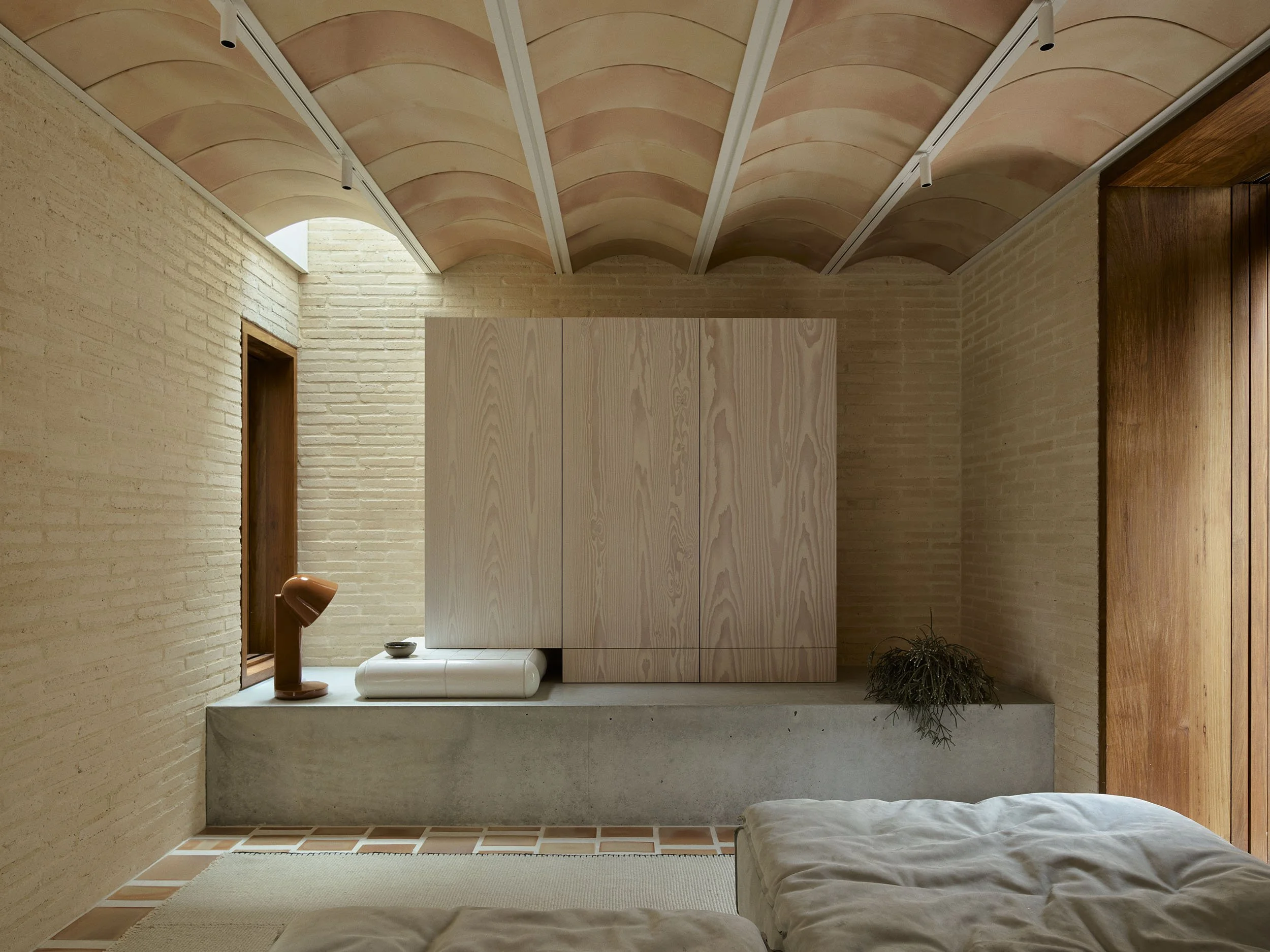
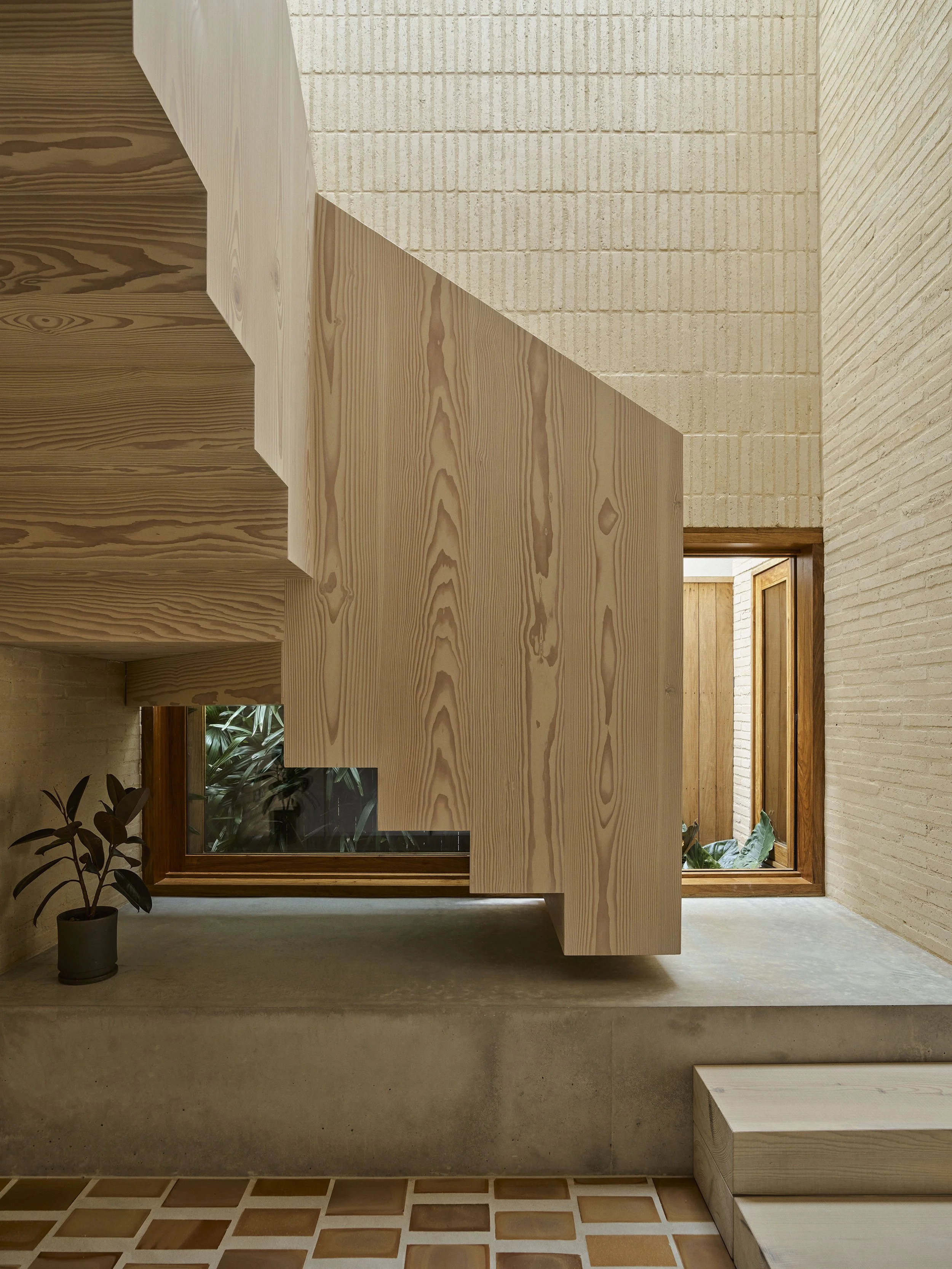
Material selection began with the cream Roman brick, chosen as the anchoring element of the house. Its tone helped reflect light through the interior while introducing warmth and depth without heaviness. From there, the wider palette was developed around it.
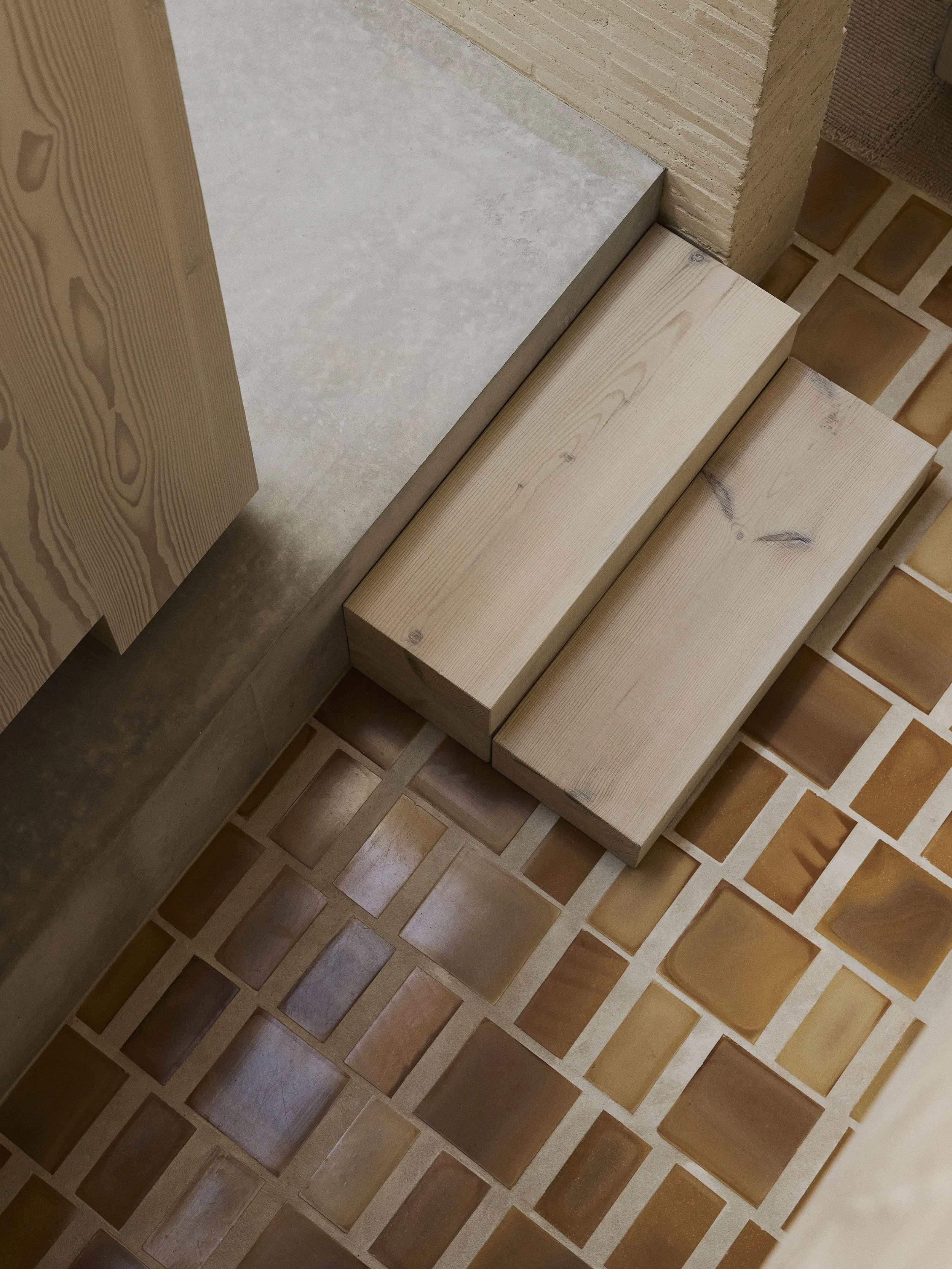
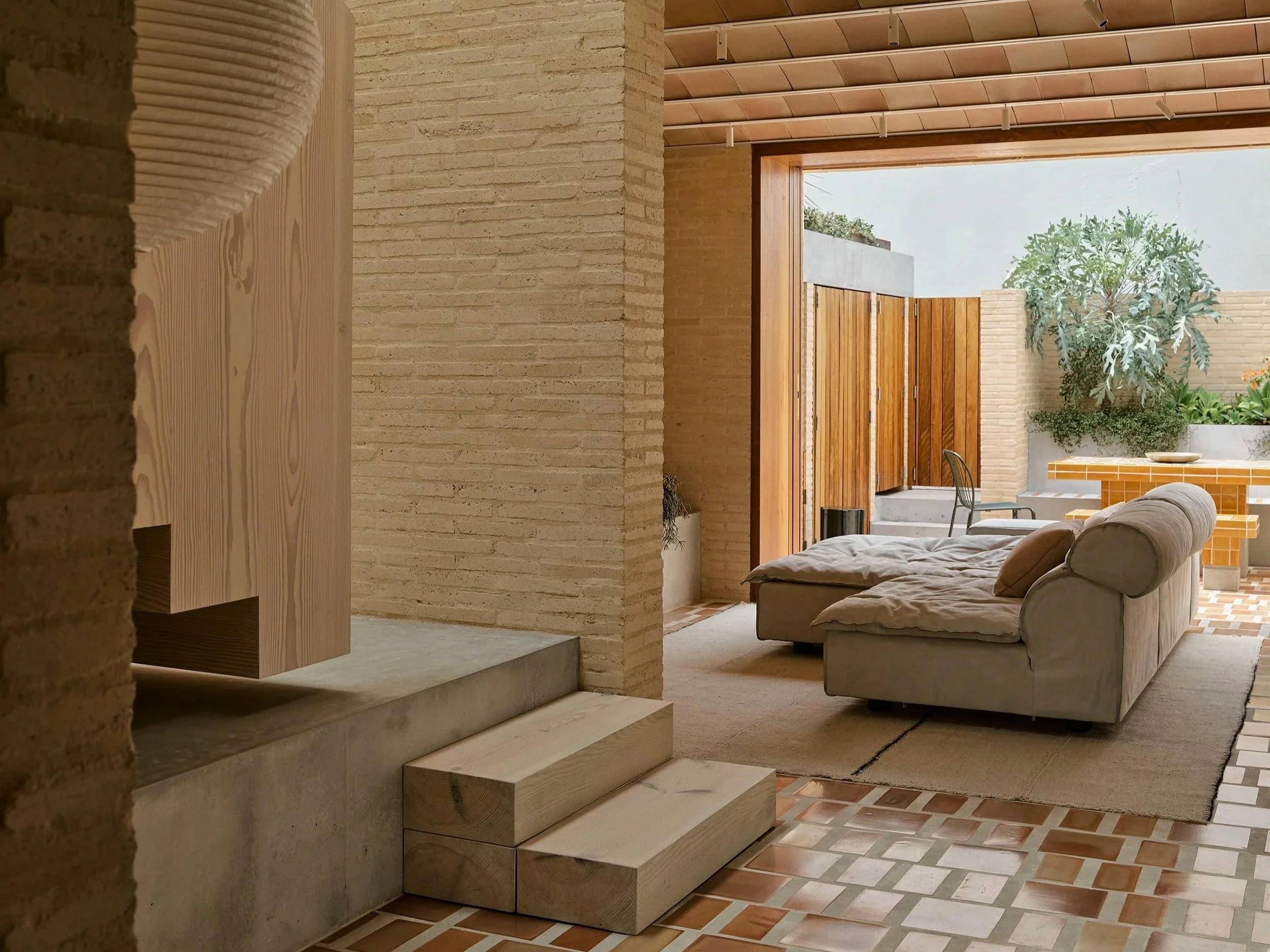
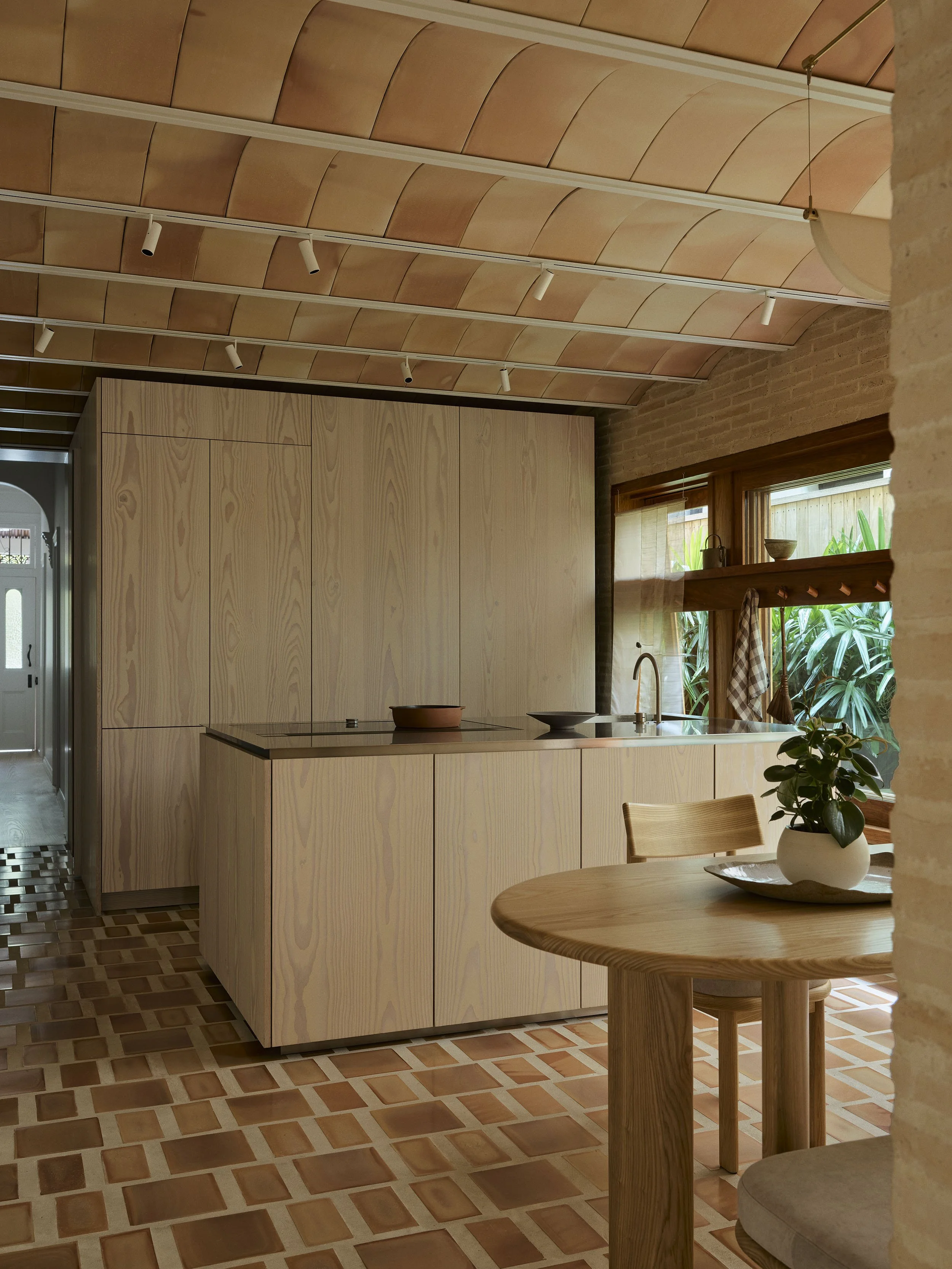
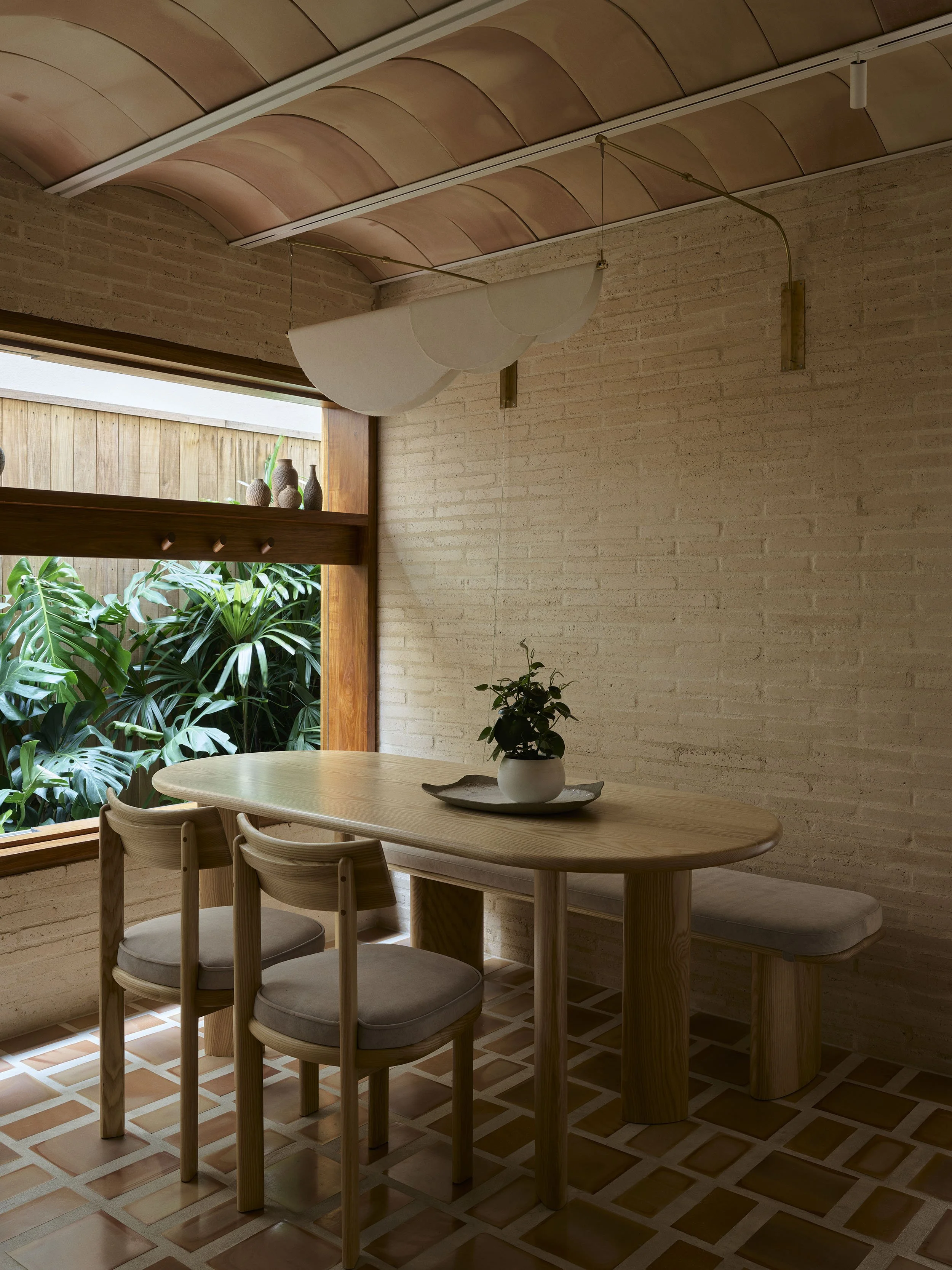
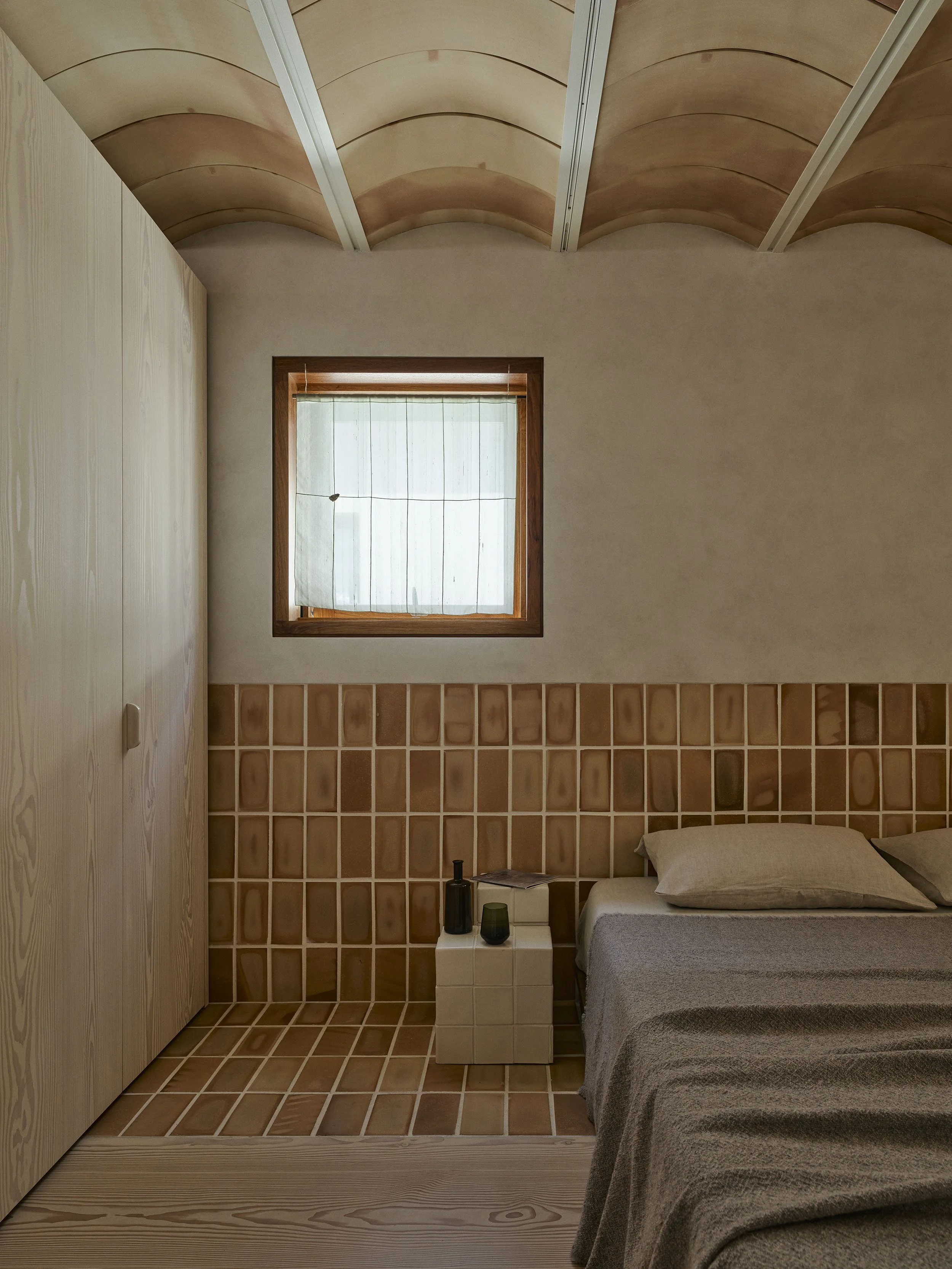
Clay was not treated as a feature material, but as a foundational one. Brick, terracotta tiles, curved clay ceiling elements and ceramic details work together to create a consistent material language across the project. This continuity gives the house its quiet strength.
The choice of clay was both practical and atmospheric. It brought durability, texture and permanence, while also shaping the softer qualities of the home — the movement of light, the feel of surfaces, and the way the spaces settle over time. Its material properties also support a more moderated internal environment and a softer acoustic quality.
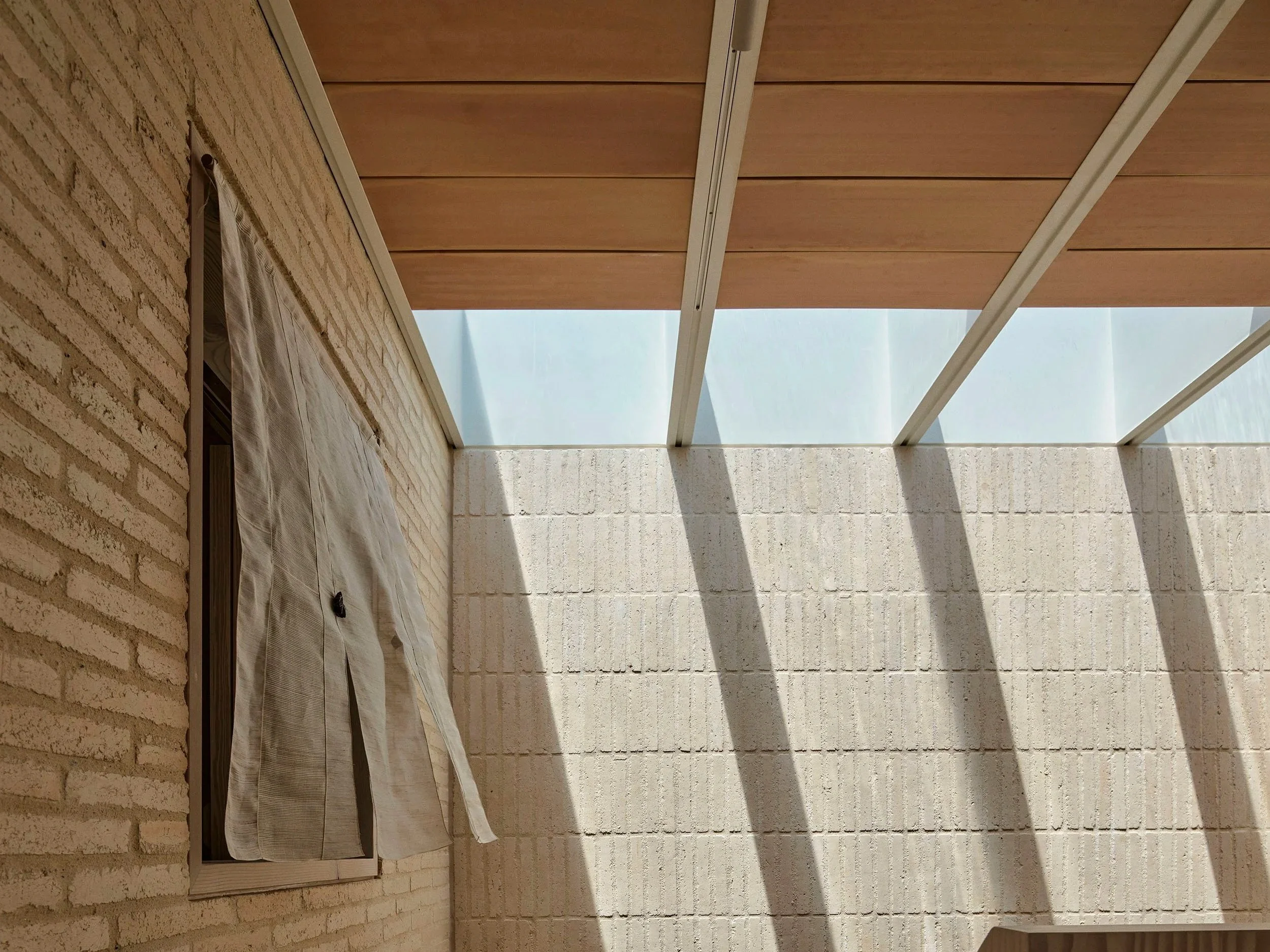
A softer layer was then introduced through furnishing and detail, including elements that referenced Michelle’s Korean heritage. Paper lights, delicate window coverings and selected furniture brought refinement and intimacy to the stronger architectural base.
Specification intent Sustainability & helath considerations
Clay House reflects a broader approach to sustainability: one based on longevity, passive performance and healthier living environments.
Clay is described in the project summary as a material that can “breathe”, helping to moderate the climate while also contributing positively to the feel of the house. Combined with natural light, ventilation and careful spatial planning, this supports a living environment that feels calmer, healthier and more stable over time.
Just as importantly, the project considered wellbeing in lived terms. Material tactility, acoustic softness, natural ventilation and a restrained palette all contribute to a home that feels grounded and calm in daily use.
For LOHAS, this is what makes the project relevant: the material choice is not decorative, but tied directly to comfort, longevity and everyday quality of life.
Specification intent
What mattered technically was not only what materials were selected, but how they were detailed and integrated.
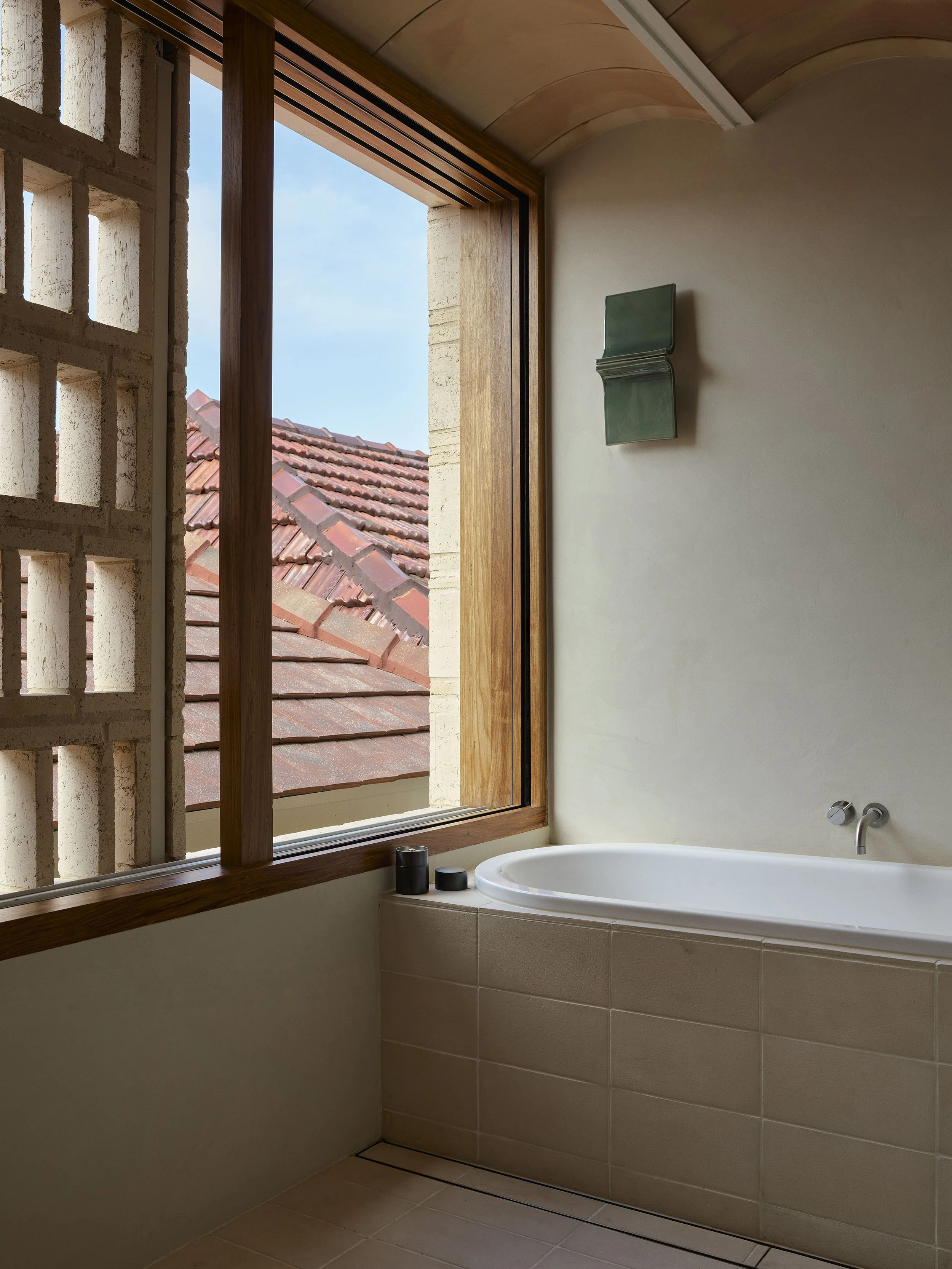
The Roman Handmade brick was chosen early to set the tonal and material direction of the project. At upper level, brick screens were used to shield diagonal views and improve privacy, while their slender vertical proportion still allowed transparency, light and outlook.
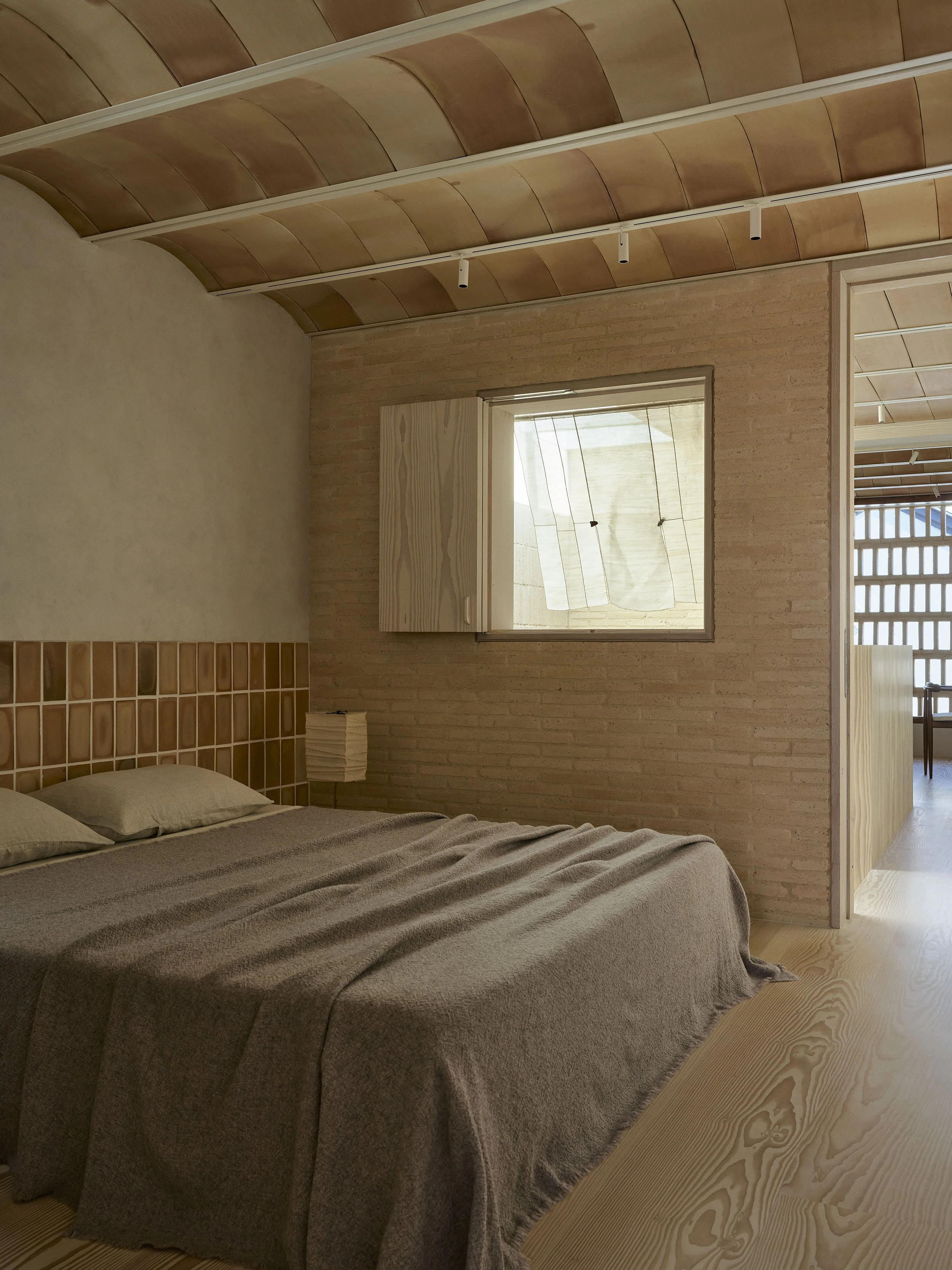
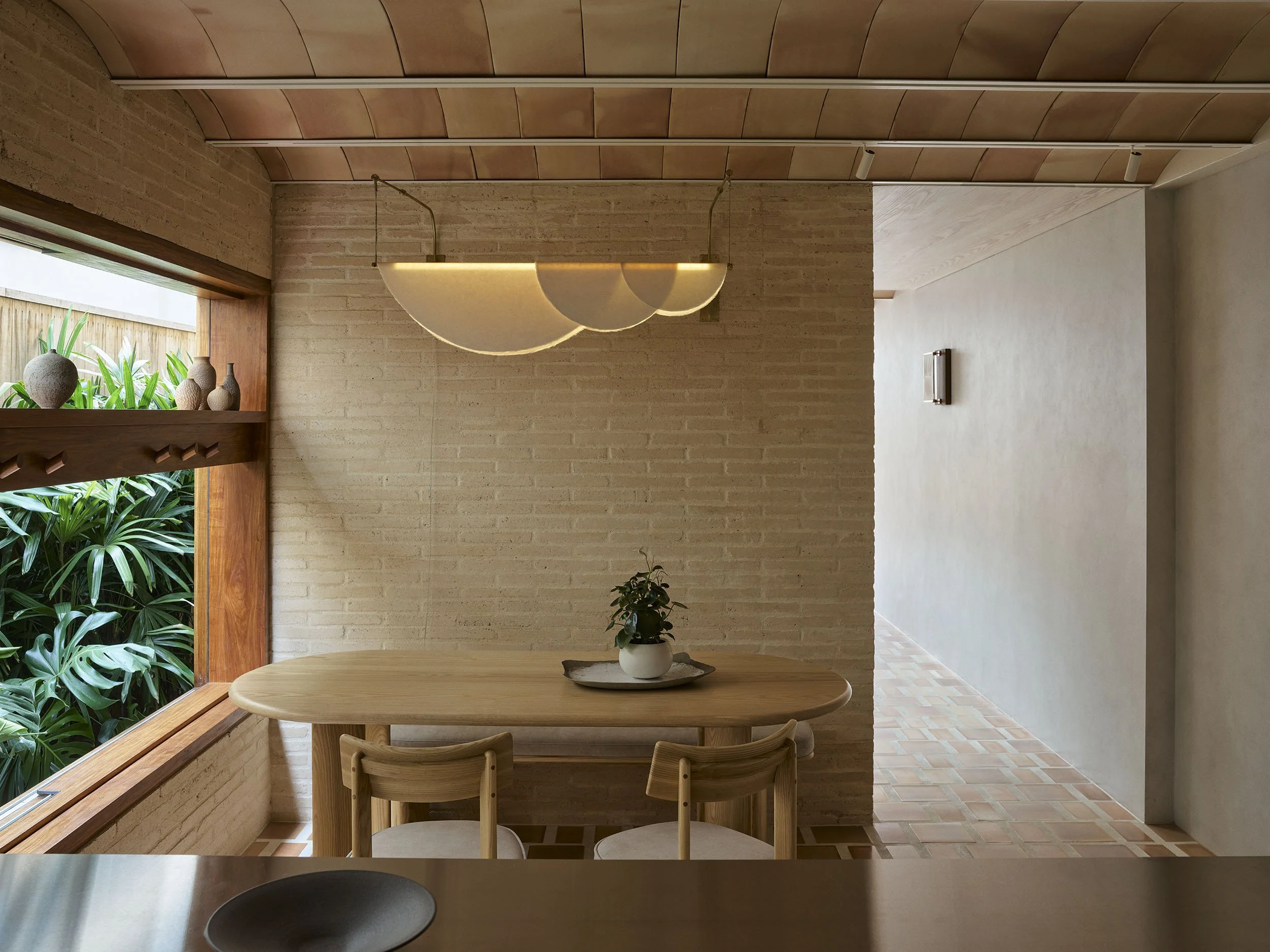
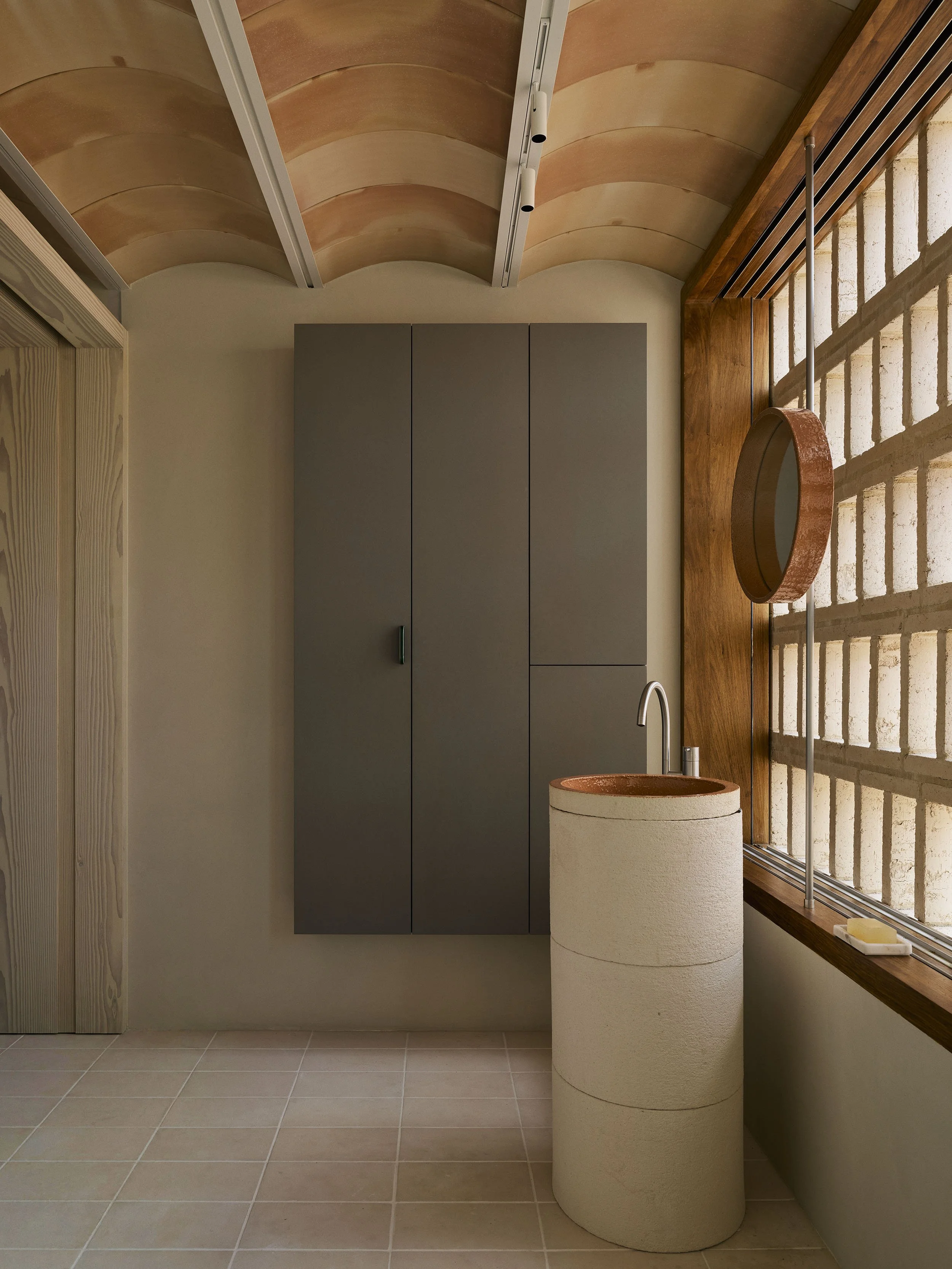
The ceiling system is one of the project’s clearest specification moves. A traditional Spanish construction method, bovedilla, was used to create little vaults across the ceiling. Steel beams span the width of the house, with tiles set between them to establish rhythm and texture. The beams were detailed to house the light fittings, avoiding the need to install fixtures directly onto the tiles themselves. The tiles were sourced from a small manufacturer in Majorca, who also produced the complementary floor tiles.
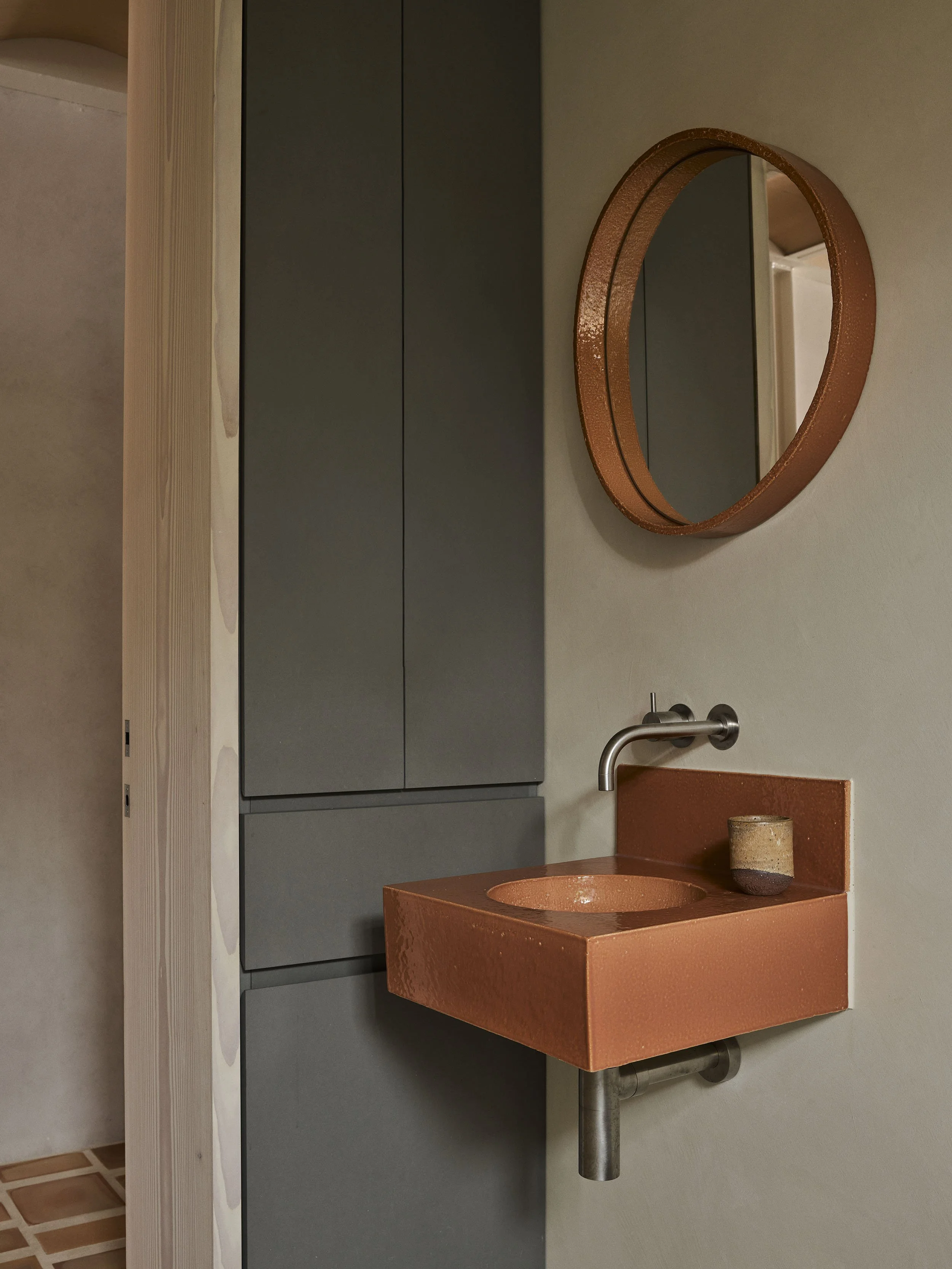
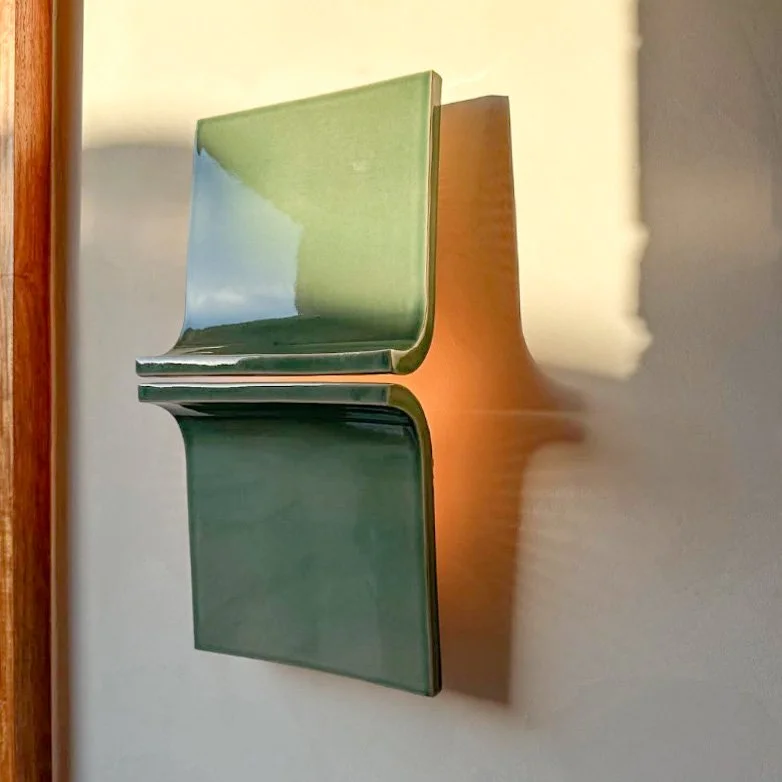
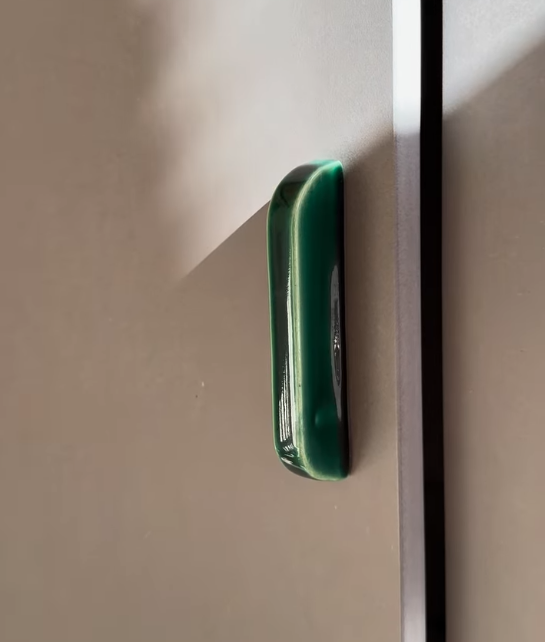
As the detailing develops, the versatility of clay comes further into view. The material is not limited to walls or floors, but extends into smaller elements such as basins, handles and lighting, showing how specification can carry a material logic through the entire project rather than stopping at surface level.
Outcome & long-term value
The result is a house that feels settled, coherent and enduring.
Clay House shows how natural materials can do more than provide finish. They can organise a palette, improve comfort, shape light, support privacy and create continuity across a home. Over time, that matters.
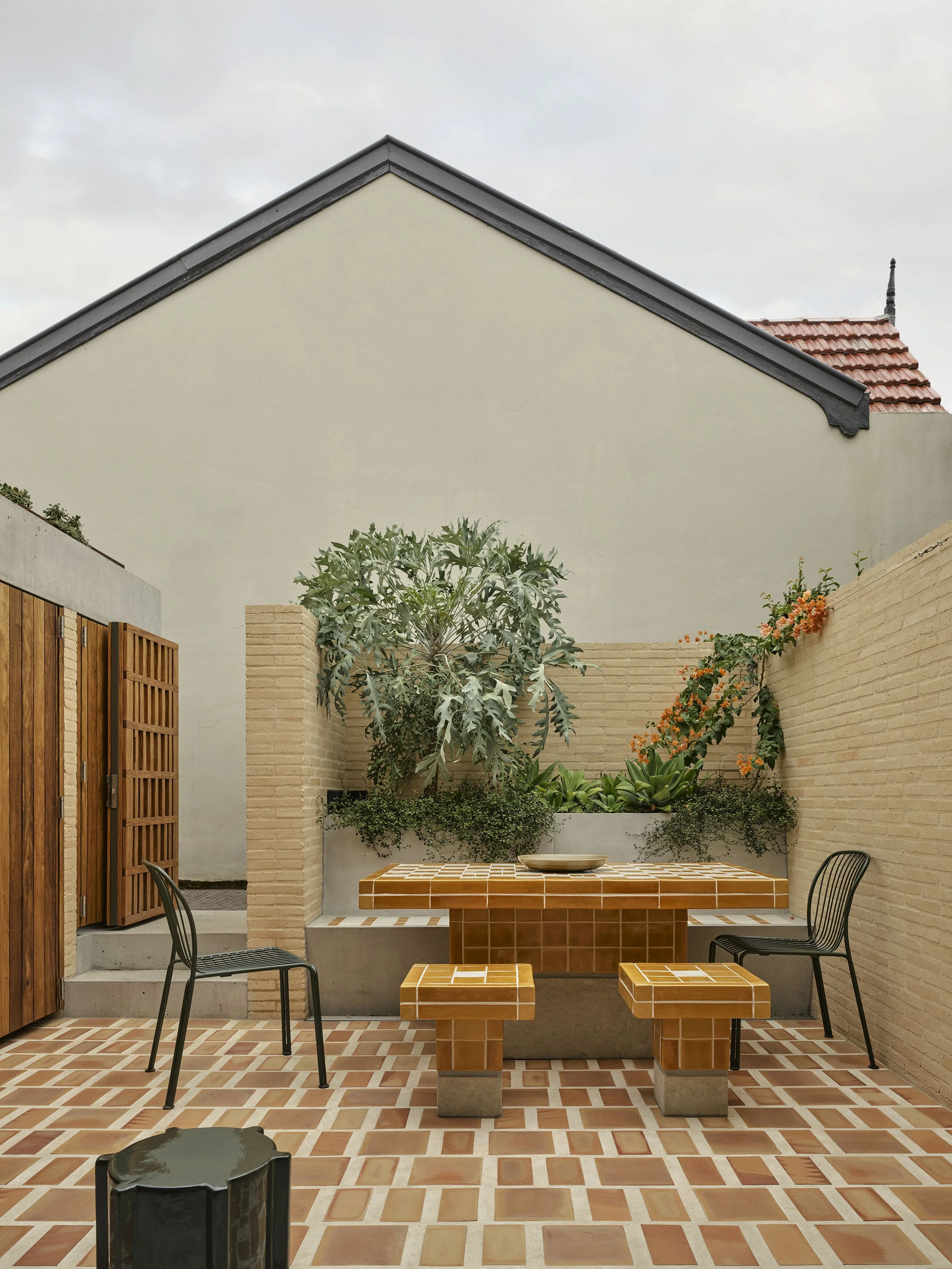
The central courtyard-like space plays an important role in this outcome. Described as a breath of fresh air and a release within the house, it brings light into the centre of the plan and reinforces the sense of openness without sacrificing enclosure. In a small terrace, that move improves both the spatial experience and the long-term liveability of the home.
What endures here is not only the material itself, but the clarity behind its use. What improves is everyday life: a home that feels calmer, healthier, more connected and built to last. The project’s lasting strength lies in how all the materials, details and lived elements settle together over time.
Some of the products featured
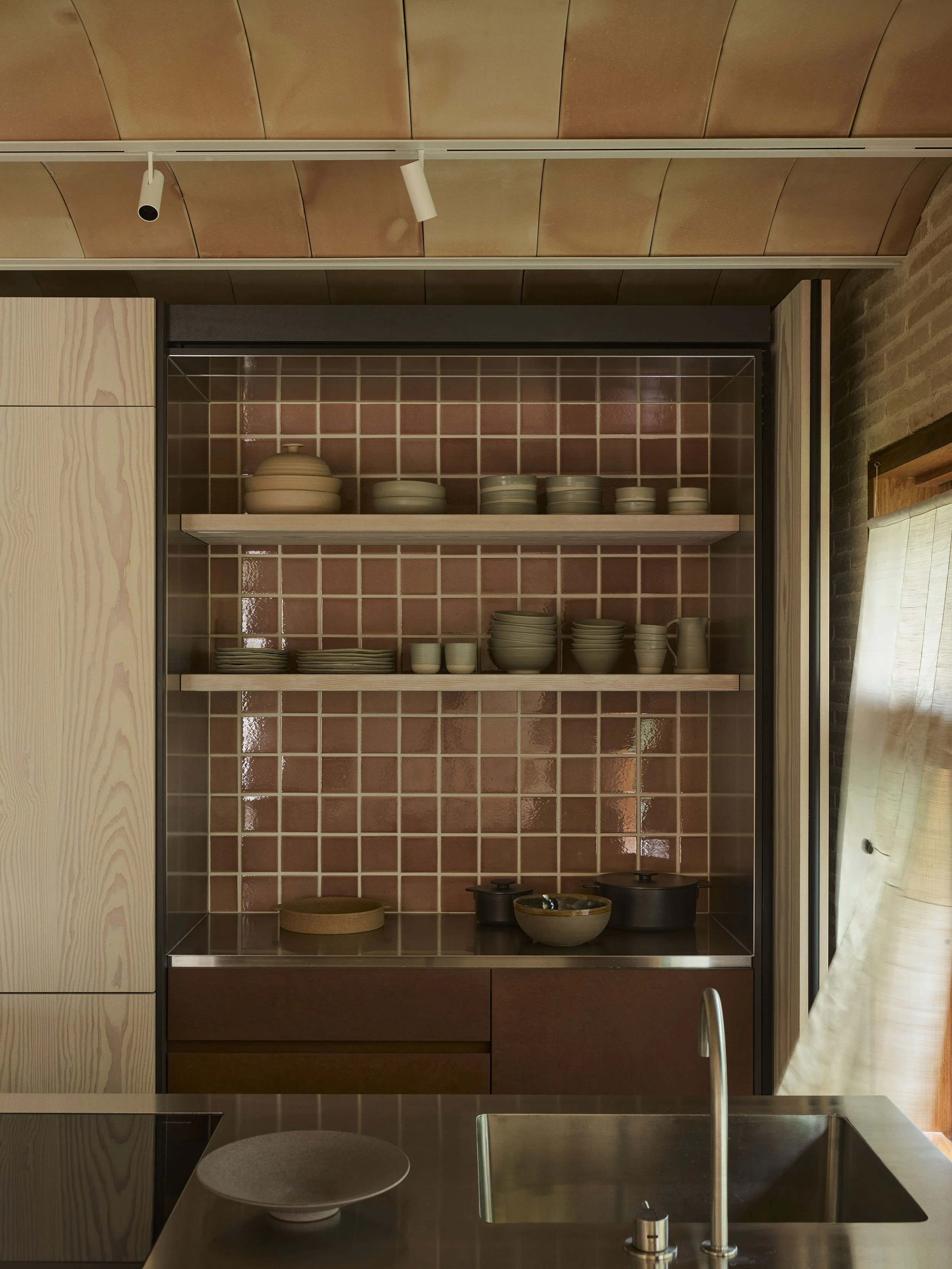
Selected for their exceptional quality and the ability to match the exact RAL colour needed to integrate the kitchen seamlessly within the wider palette of the house.
Selected for their exceptional quality and the ability to match the exact RAL colour needed to integrate the kitchen seamlessly within the wider palette of the house.
Selected for their exceptional quality and the ability to match the exact RAL colour needed to integrate the kitchen seamlessly within the wider palette of the house.
Selected for their exceptional quality and the ability to match the exact RAL colour needed to integrate the kitchen seamlessly within the wider palette of the house.
Selected for their exceptional quality and the ability to match the exact RAL colour needed to integrate the kitchen seamlessly within the wider palette of the house.
AF Handle
Selected for their exceptional quality and the ability to match the exact RAL colour needed to integrate the kitchen seamlessly within the wider palette of the house.
Ceramic Wall Light
Selected for their exceptional quality and the ability to match the exact RAL colour needed to integrate the kitchen seamlessly within the wider palette of the house.
Selected for their exceptional quality and the ability to match the exact RAL colour needed to integrate the kitchen seamlessly within the wider palette of the house.
Selected for their exceptional quality and the ability to match the exact RAL colour needed to integrate the kitchen seamlessly within the wider palette of the house.
Selected for their exceptional quality and the ability to match the exact RAL colour needed to integrate the kitchen seamlessly within the wider palette of the house.
Get in touch to explore the right material approach for your project.
Whether you are early in the design process or refining a specification, our team can help guide product selection, detailing and technical considerations to suit your project.